

Many years ago, ah yes, well for perfect accuracy let’s make that many decades ago, I purchased a bottle of Ginkgo Biloba. Cheaper than it is today.
At the time it was a fad. “Be sharper, keep your memories.” Those were general claims. I can’t remember (ha) whether I used the whole bottle or not but it didn’t seem a great success to me at the time.
What I didn’t realize then, is that memory decline generally has a prolonged period (perhaps years or decades) in which few symptoms are noticed. Also brain health has at least one thing in common with physical fitness. If you are very fit and active in younger years it helps promote the same as you age. The work of neuroscientists reminds us that starting good habits younger helps stop the pathogenesis, which is the process by which the disorder (or disease) develops, in the first place. This process, or pathogenesis, not only contributes to the onset of a disorder but it can affect either the speed of progression or the maintenance of it as well.
Dementia can’t be totally cured and aging of a brain can’t be fully stopped. Still, it can be stalled somewhat (see Any Truth to Outsmarting Alzheimer’s?). More importantly to this post, memory can get a bit of a boost, especially if we begin before we forget the frying pan is in the freezer.
The healthier the lifestyle that we adopt early in life (despite if we don’t start as soon as our twenties) means the freer we may be from neurodegeneration. I hope it’s true that even if you don’t start until 80 years old, it may help at 90. Not a guarantee for sure, but an added (and cost-effective) insurance policy.
Two Important Elements for Deterrence
Our neurological health is closely tied to the health of our many neurons and their supporting networks. Diseases like Alzheimer’s and Parkinson’s play havoc with our neurological systems and cause degeneration. Additionally, the same processes that create damage from those diseases can act in milder ways in the formation of gentle dementia and memory impairment from aging.
Neurodegenerative diseases involve (amongst other things) dysfunctions in the networks of neurons, synapses, and glial cells in various brain areas. These disorders are the most common chronic neurological diseases that are associated with age. Whether in ourselves or loved ones they have a strong impact on quality of life and frustrations with aging.
They are all related by the health of our neurons. Oxidative stress and neuroinflammation are the underlying factors. They are two key pathological progressions that impair our recall and retention, regardless how severe the memory loss.
Granted these issues are complicated with many details involving the chemical and biological actions. For instance, oxidative stress alone that can cause shrinkage of the hippocampus (which is critical for memory) has multiple types: lipid oxidation, DNA oxidation, metal, protein (including tau protein made famous by Alzheimer’s research). Each reaction and each brain area have been the focus of multiple grad student’s dissertations and studies by researchers.
I mention the complex science behind these two processes mostly to say we don’t need to understand it all. We can benefit from aids and actions while engaging in the more interesting (or at least simpler) joys of life.
[If you felt the yearning, you could delve into more of these bodily systems starting with the resources provided in this post. Admittedly, I’d rather watch some mystery show on PBS.]
Antioxidants & Anti-inflammatory Powerhouses
What we covered in the last section sounds complicated; it is. Still, most of us have heard of, or have a product on our shelf that either asserts it is an Antioxidant or Anti-inflammatory agent. Hence their claims are for the protection against oxidative stress or irritation in our neurological system (dampening neuroinflammation).
Combined together they are powerhouses in maintaining synaptic function, neuroplasticity and the hoped-for satisfactory cognitive performance.
Epidemiological and clinical trials have given us insights into how antioxidants can effectively reduce risk or delay onset of these disease disorders (like Alzheimer’s). Other work has been done on the inflammation process in many bodily disorders including brain health. These anti-inflammatory agents neutralize damaging free radicals; restoring balance and thus preventing further brain cellular damage. Less has been done on combining these agents.
Some such investigation of synergistic effects has been started. For example, research has demonstrated that by improving gut microbiome balances, which then reduces systemic inflammation, it supports the functions of a healthy brain. Studies need to be ongoing.
I have several friends who because of family history are extremely stressed over their own risk of memory loss. Every time a small word alludes them or a name cannot be retrieved for hours, they wonder “is this the first sign?”
Future research would best be served by elucidating the role of this amalgamation treatment (combining antioxidants and anti-inflammatories). Such would offer insights into how we as non-researchers can live healthier lives, less burdened by neurodegenerative disorders or the fear of them. How many times have you heard someone say that losing their ‘mind’ is their greatest fear, more than physical ailments?
Practical Applications
Aging_with_Pizzazz is often about harvesting the low-hanging fruit. Aside from the few herbs I would like to point out in regard to memory care, there are other habits and dietary behaviors as well.
A diet which is rich in plant-based foods provides a broad spectrum of antioxidants and anti-inflammatory phytochemicals. We all have to grocery shop and cook, might as well plan on a few plates to slow progression of neurodegeneration.
While our genetics play a dominant role, science really does show that a better diet (started sooner than later) has a good chance of stopping the causes of neurodegenerative diseases.
Examples of foods with elements of both the powerhouses include fruits (especially berries), leafy Greens (Glorius GLVs-Delectable Recipes for Enjoying Green Leafy Vegetables), cruciferous vegetables, nuts, seeds, avocados, fatty fish oils, olive oil, whole grains and culinary spices which I will address below. This sounds like a delicious win-win to me.
Flavonoids, which can cross the blood brain barrier and fortify brain defenses, promote both reduction of inflammation and oxidation. (They are a subject for another post sometime.)
There is another post I’ve considered regarding this Antioxidant/Anti-inflammatory behavior. For those who might like to consider more of their own reading, there are other natural and significant supplements which fit this category, including:
- Molecular hydrogen
- Glutathione
- Astaxanthin (also enhancements power of several of the herbs below)
- Quercetin
- Ascorbyl palmitate (a less common form Ascorbic acid – vitamin C)
- Catalase
- SOD – Superoxide Dismutase
Along with good movement and exercise, these products make for terrifically good health habits. Even the addition of one of these (or more) is a plan to protect against age-related cognitive changes as well as enhancing independence, comfort and better mood.
Five Major Herbal Helpers for Brain Health
From my reading, which is more conclusive than my use, I am choosing these five herbs as having primary properties that support memory and brain health. (They are in alphabetical order only.)
None of these herbs are unfamiliar; we’ve heard of them. But the benefit is not experienced by a couple culinary pinches each week. It takes more deliberate supplementation.
Each of these, which can easily be found in supplement form, includes both Antioxidant and Anti-inflammatory properties.
1. Ashwagandha
 Credit: Ashwagandha root_Photo by Paul Green on Unsplash
Ashwagandha is known as an adaptogen (see ADAPTOGENS – Adapt your Attitude to Alternatives with Resistance Herbs) and is also called Indian Ginseng or Withania somnifera. It’s common in Ayurvedic medicine. It has been found to have neuroprotective effects and improve cognitive function. In some ways similar to the pharmaceutical drug Rapamycin, it contains compounds that promote nerve cell growth while reducing inflammation and enhancing benefits of antioxidant activity.
2. Ginger (Zingiber officinale)
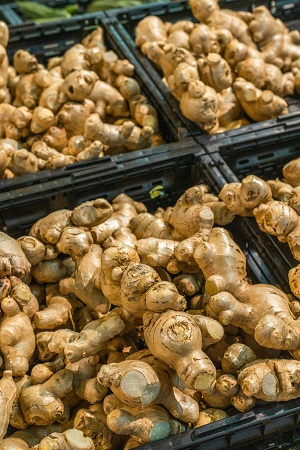
Credit: Ginger Photo by Mitchell Luo on Unsplash
Ginger is familiar to us in so many forms, from seasoning to candies. Depending on the source and preparation its antioxidant effectiveness can range from nil (candy) to strong with dried and extract forms. (Dried and extract forms are much stronger than fresh or stir-fried ginger.) It is effective as an antioxidant combatant of oxidative stress via multiple bioactive compounds like gingerol, shogaol and zingerone. This natural and safe product is an excellent scavenger of free radicals, helping enzyme modulation and providing us with anti-inflammatory benefits. Taken regularly, reports show it not only reduces inflammation in our brain but also in osteoarthritic joints with pain or limited mobility.
3. Ginkgo Biloba
 Credit: Photo by Tao Yuan on Unsplash
Ginkgo biloba is said to be one of the oldest living tree species. It’s long been used in traditional Chinese medicine. Ginko Biloba has a similar reaction as the aforementioned chemical astaxanthin (a red-orange carotenoid pigment found in seafood like salmon and shrimp). GB exhibits anti-inflammatory effects, primarily through its flavonoids and terpenoids, which modulate inflammatory pathways and reduce markers of inflammation. Since it is known for these strong antioxidants and anti‑inflammatory effects, it’s widely used in supplements for skin, eye, heart and immune health. Here I’m pointing out its properties that have been found to improve recall and retention by fighting against oxidative stress. [Who knows if that early jar of mine helped or not.]
 4. Ginseng
Credit: Photo by bencaoquan-JhOuD2wEiJs-on Unsplash
Well known in traditional Chinese medicine, it’s been found to promote cognitive function and improve age-related memory problems. There are numerous types of Ginseng. While it is controversial as to which is the best type, in multiple studies comparing the antioxidant activity among the different varieties, Korean red ginseng (Panax ginseng, steamed) has been shown to be the strongest.
 5. Turmeric
Credit: Photo by Prchi Palwe on Unsplash
Many of us know Turmeric (Curcuma longa) as a spice used in cooking. Its vibrant yellow color (which can easily dye cloth or stain clothes) is accompanied by a distinct flavor (which has recently become an added choice for special drinks in many coffee shops). Its active compound is called curcumin, with potent anti-inflammatory and antioxidant properties. It can be paired with astaxanthin to boost overall oxidative defense. Turmeric (through Curcumin) has been a highly researched herb and been found valuable to health by improving both memory and cognitive function. I equate Turmeric with fighting inflammation and take it regularly in capsule form as well as using it in cooking.
Less Helpful but Notable Herbs in Literature
A few other herbs are worthy of note for their protection against brain aging. They are not necessarily as strong as the elements above, or those I mentioned deserving their own posts. Still, every little bit helps, and several have significant other qualities. Each contains some neuroprotective effects, either through antioxidant or anti-inflammatory behaviors, or both.
1. Lemon Balm also called Melissa officinalis is well known for its calming properties.
2. Water Hyssop (aka Bacopa Monnieri). Long used in Ayurveda medicine often considered for improving learning abilities and retention by protecting against oxidative stress.
3. Gotu Kola (aka Centella asiatica), also known in Ayurveda medicine. It is said to promote neurogenesis (growth of new neurons) and enhance brain function.
4. Culinary Sage. Long used even in the Americas for medicinal purposes. It’s been shown to enhance cognitive function and memory through both antioxidant and anti-inflammatory effects.
While Sage is probably the strongest of some well-known culinary herbs, there are others. These include Rosemary, Thyme, Oregano, Basil, Parsley, and Mint. They are said to be packed with antioxidants and phytochemicals, thus neutralizing free radicals and reducing inflammation.
I imagine that you have most of these in your kitchen cabinet, so it’s easy to partake in their advantage. True the amounts needed to significantly lower inflammatory markers and improve cardiovascular and neuroprotective health are substantial. For most benefit, studies show daily doses of up to 3 grams of individual herbs or 6.6 grams of combined herbs are needed. That’s why you can easily find them in supplemental form. Nevertheless, they are excellent additions not only to our diet but to our palate.
Final Thought
It should be pointed out the Neurodegenerative diseases most often have a prolonged asymptomatic phase. Before we get to a stage of showing symptoms, we can take steps even on our own to make a difference.
While dementia is a challenging condition with no definitive cure, the use of certain herbs may aid in preventing its onset or its symptoms and promote general cognitive health. Incorporating some of these herbs into your daily routine along with a healthy lifestyle can contribute to maintaining cognitive function and overall brain health as you age.
Of course, there is also the added advantage of adding flavorful zest to your life. So, let’s spice it up.
RESOURCES
Antioxidants and Anti-Inflammatory Effects in Neurodegenerative Diseases (NDs) – PMC
Campolo M, Paterniti I. Antioxidants and Anti-Inflammatory Effects in Neurodegenerative Diseases (NDs). Antioxidants (Basel). 2022 Jun 14;11(6):1172. doi: 10.3390/antiox11061172. PMID: 35740069; PMCID: PMC9220229.
Ginsenosides: A Potential Neuroprotective Agent – Zheng – 2018 – BioMed Research International – Wiley Online Library.
Zheng, Mengmeng, Xin, Yizhou, Li, Yujuan, Xu, Fangxue, Xi, Xiaozhi, Guo, Hong, Cui, Xiaowei, Cao, Hui, Zhang, Xi, Han, Chunchao, Ginsenosides: A Potential Neuroprotective Agent, BioMed Research International, 2018, 8174345, 11 pages, 2018. https://doi.org/10.1155/2018/8174345
Scientific basis for the use of Indian ayurvedic medicinal plants in the treatment of neurodegenerative disorders: ashwagandha – PubMed .Efficacy and Adverse Effects of Ginkgo Biloba for Cognitive Impairment and Dementia: A Systematic Review and Meta-Analysis.” Tan, Meng-Shan, et al. November 21, 2014.
Note: Conclusions of this study: Ginko Biloba (EGb761) “at 240 mg/day is able to stabilize or slow decline in cognition, function, behavior, and global change at 22–26 weeks in cognitive impairment and dementia, especially for patients with neuropsychiatric symptoms.”
Scientific basis for the use of Indian ayurvedic medicinal plants in the treatment of neurodegenerative disorders: ashwagandha – PubMed M R Ven Murthy, et al. September 2010.
Emerging role of antioxidants in Alzheimer’s disease: Insight into physiological, pathological mechanisms and management – ScienceDirect– Important overview
—
Credit: brain connections- title Photo by Luke Jones on UnsplashShare This: 


Thanks for the clear overview, drB. This issue has been on my mind lately. I wonder, for those of us who need to keep life as simple as possible, is there a supplement you could recommend that combines some or all of your 5 highlighted herbs into a reasonable daily dose?
Thanks for asking Darrow. I must admit I don’t know the answer to that question.
I generally don’t think in those terms because it is difficult to find just what you want in one reasonably-priced supplement (that doesn’t look like a horse-sized pill). I prefer to get supplements individually although I admit the number of caps I take does get annoying.
Still, for me, it would just take too long to find such a product (although I can certainly see WHY you would want one). Also, to keep my life simple, I purchase most of my products (NOT ALL) at Piping Rock.com. They have a lot of variety, but I still haven’t seen the kind of product you are describing.
When I want to combine elements, I find myself tending to compromise. Most combos will include things I don’t want and not all that I do. I took a quick peek for you but didn’t find a one-size-fits-all item.
I will mention two things if you start to look yourself.
1) If there are elements aside from herbs, the ones I mentioned in my blog post are super (and stronger), so keep these in mind:
• Glutathione
• Astaxanthin (also enhancements power of several of the herbs below)
• Quercetin
• Ascorbyl palmitate (a less common form Ascorbic acid – vitamin C)
• Catalase
• SOD – Superoxide Dismutase
2) I left out lots of herbs that have a good reputation. I was trying to make the shopping list easy. But one that I included in the secondary list is particularly good – AND often combined with others is Brahmi. (I call it by one of its names in the post – Water Hyssop. It’s also known as Bacopa Monnieri or Indian Pennywort). The reason I mention this one it that when looking for combo products it’s an added plus even if the other herbs aren’t included.
Sorry I don’t have a speedy answer for this one. I appreciate your desire to keep it in one package,but must admit I doubt that you will easily find such a product. If you do, please let us all know. In the meantime, I’ll keep it on my to-do list as well.
drb
Thanks for the detailed reply!